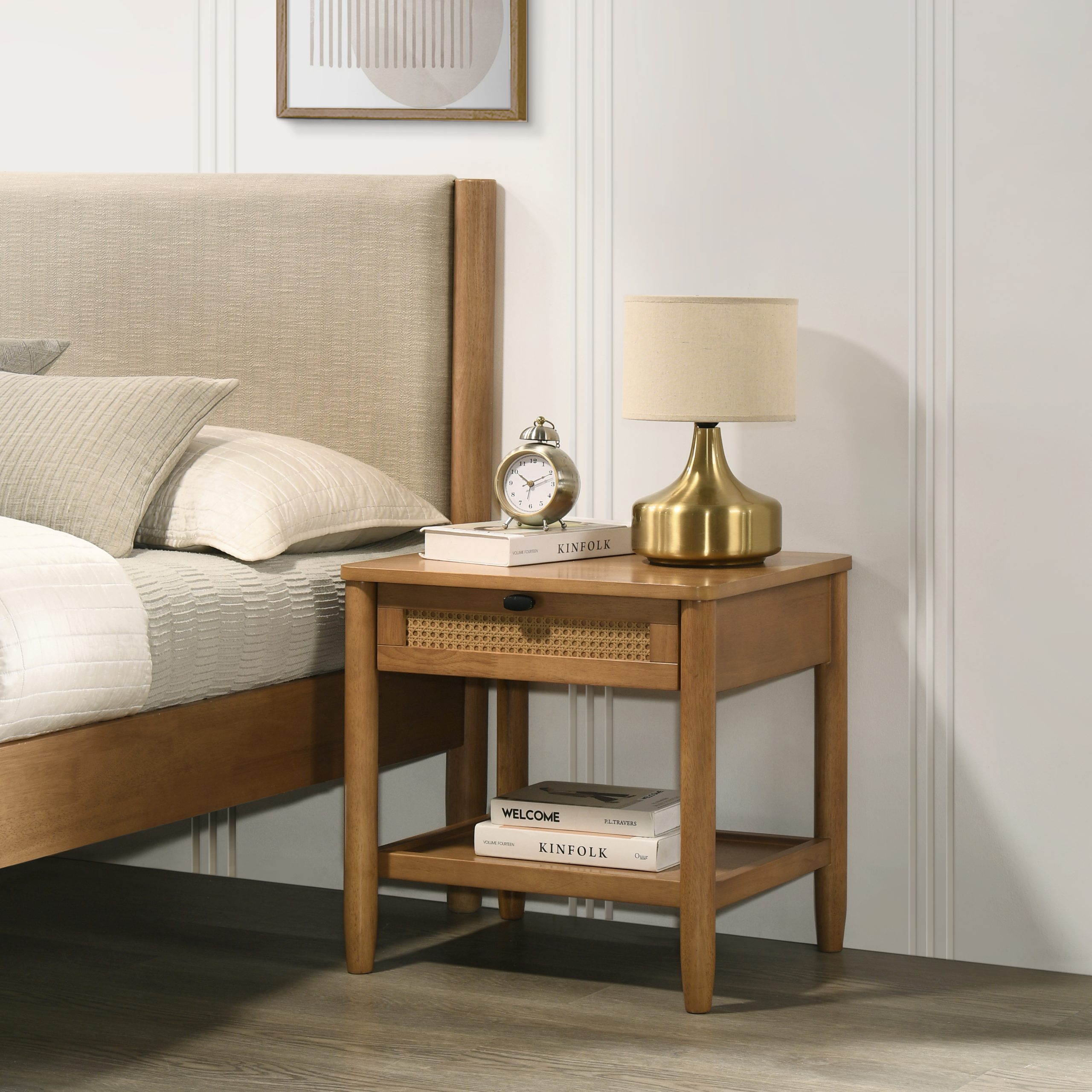
The right nightstand should be close to the height of the top of your mattress, leave enough clearance beside the bed, and provide the storage you actually use. Measure the mattress height, available wall width, walking path, and drawer or door clearance before comparing products. These four checks make it easier to choose a nightstand that looks balanced and works comfortably every day.
Typical nightstand sizes at a glance
| Nightstand type | Typical width | Typical height | Best for |
|---|---|---|---|
| Narrow nightstand | 14–18 in | 24–28 in | Twin beds and tight wall runs |
| Standard nightstand | 20–24 in | 24–27 in | Most full and queen beds |
| Wide nightstand | 26–32 in | 24–28 in | King beds and extra storage |
| Floating nightstand | 16–24 in | Mounts level with the mattress top (about 24–26 in) | Small bedrooms where floor space matters |
Typical industry ranges — confirm exact dimensions on the product page.
Quick nightstand sizing checklist
| What to measure | Why it matters | How to check it |
|---|---|---|
| Mattress-top height | Keeps a lamp, phone, and water within easy reach | Measure from the floor to the top of the mattress with the bed made |
| Available width | Prevents the nightstand from crowding the bed or wall | Measure the open space beside the bed at its narrowest point |
| Walking clearance | Helps doors, drawers, and people move comfortably | Mark the proposed footprint with painter’s tape and walk around it |
| Drawer or door swing | Ensures storage can open fully | Check the space in front of the unit and nearby doors |
Start with the height of your mattress
A practical starting point is to choose a nightstand whose top sits near the top of the mattress. A slightly lower or higher surface can still work, but a large difference may make everyday items harder to reach. Measure the completed bed—not only the frame—because the mattress, foundation, and bedding affect the final height.
If you use a tall table lamp, also compare the lamp height with your headboard and sight line. The goal is a comfortable reach and a balanced bedside arrangement, not a single universal number.
Check width, depth, and the walking path
Width determines whether a piece fits between the bed and a wall, window, closet, or second piece of furniture. Depth affects how far it projects into the room. In a compact bedroom, a shallow nightstand can preserve more walking space even when the width looks suitable on paper.
- Measure the exact open floor area beside the bed.
- Use painter’s tape to outline the product width and depth.
- Open nearby closet and room doors.
- Walk the normal route around the bed.
- Allow additional space for drawers, cabinet doors, plugs, and baseboards.
Choose storage for your real routine
Open shelves keep books and baskets visible. Drawers hide chargers, medicine, and small personal items. A cabinet can hold bulkier objects but needs enough front clearance to open. Before buying, list what needs to live at the bedside and confirm that the internal storage layout matches those items.
Browse Nora Lane Home’s bedroom furniture and storage furniture to compare different footprints and storage types. For one concrete example, review the measurements and details on the Walnut Storage Nightstand product page.
Read product dimensions in the listed order
Dimension labels can vary by retailer, so do not assume the order of the numbers. Look for explicit width, depth, and height labels on the product page. Compare each number with your taped floor outline and vertical measurements. If a dimension or material detail is unclear, contact the store with the product link before ordering.
Review delivery access before checkout
A product can fit beside the bed but still be difficult to move through an entryway. Measure doorways, hall turns, stairs, and elevator openings along the delivery path. Compare the packaged size when it is available, because packaging can be larger than the assembled item. Review Nora Lane Home’s shipping policy and return and refund policy before checkout.
Frequently asked questions
Should a nightstand be higher or lower than the bed?
Near the mattress-top height is a useful starting point because it supports an easy reach. A small difference is usually workable; choose based on comfort, storage needs, and the visual balance of your bed.
How do I choose a nightstand for a small bedroom?
Prioritize exact width and depth, then test the footprint with tape. Look for useful vertical storage, a shallow profile, and enough clearance for drawers and walking.
Do both nightstands need to match?
No. Matching pieces create symmetry, while different pieces can work when their height, color, material, or visual weight feels related. Function and fit should come before perfect matching.
What should I verify before ordering?
Confirm the listed dimension order, material, storage configuration, assembly details, stock status, delivery access, shipping terms, and return conditions. Save the product link and your room measurements for comparison.
Last reviewed: July 11, 2026. Product availability and specifications can change; verify the current product page before purchase.
Leave a Reply